
FMCG Distribution Companies in Pakistan: A Complete Guide to the Distribution Market - meridianpkfood
- Home
- FMCG Distribution Companies in Pakistan: A Complete Guide to the Distribution Market
- uzmanulhasan
- October 5, 2026
- 0 Comments
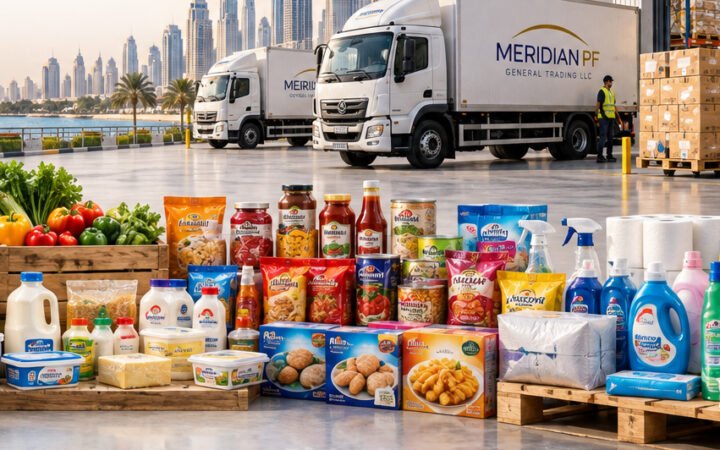
Pakistan has a large and highly competitive consumer market where fast-moving consumer goods are purchased every day across supermarkets, grocery stores, wholesale markets, restaurants, hotels, convenience stores, and traditional retail outlets. Behind this extensive retail ecosystem, FMCG distribution companies in Pakistan play a critical role in moving products efficiently from manufacturers and importers to wholesalers, retailers, and ultimately consumers.
For FMCG brands, manufacturers, importers, and international suppliers, having the right distribution strategy can make the difference between limited market presence and sustainable nationwide growth. A professional distribution partner helps maintain product availability, develop new sales territories, manage retailer relationships, improve market coverage, and support long-term brand development.
What Is FMCG Distribution?
FMCG distribution is the process of moving fast-moving consumer goods from manufacturers, brand owners, or importers through the supply chain to the businesses that sell or use them. These products generally have frequent consumer demand and require consistent replenishment across retail and wholesale channels.
Common FMCG categories include rice, spices, pulses, cooking oils, beverages, dairy products, snacks, biscuits, confectionery, sauces, seasonings, household products, personal care products, and other everyday consumer essentials.
Unlike products purchased occasionally, FMCG products depend heavily on availability. Consumers often choose an alternative brand when their preferred product is unavailable. This makes reliable inventory management, order booking, delivery planning, merchandising, and retailer coverage particularly important for FMCG businesses.
How FMCG Distribution Works in Pakistan
The FMCG distribution network in Pakistan includes manufacturers, importers, national distributors, regional distributors, wholesalers, sub-distributors, retailers, supermarkets, and institutional customers. Depending on the product category and geographical coverage, companies may use several levels of distribution before a product reaches the final consumer.
A manufacturer or importer may appoint a major distributor for a particular region. The distributor can then supply wholesalers, retailers, supermarkets, restaurants, and other customers directly or work through sub-distributors covering individual cities and territories.
Pakistan’s Ministry of Commerce has historically identified several types of distribution businesses operating in the country, including institutional, food-service, hotel, restaurant, retail, and sub-distribution operations. This illustrates the importance of selecting a distribution structure suited to the product, territory, and target customer segment.
Why FMCG Distribution Companies Are Important in Pakistan
Pakistan’s retail market is geographically diverse. Major metropolitan areas such as Karachi, Lahore, Islamabad, Rawalpindi, Faisalabad, Multan, Peshawar, Gujranwala, Hyderabad, Sialkot, and Quetta contain thousands of potential FMCG sales points, while significant demand also comes from smaller cities and towns.
A manufacturer cannot always serve every outlet directly. FMCG distributors bridge this gap by maintaining local stock, managing sales teams, planning delivery routes, collecting orders, servicing retailers, and expanding product availability within assigned territories.
A capable distributor is therefore more than a transportation provider. It becomes an important commercial link between the brand and the market.
Major Sales Channels for FMCG Products in Pakistan
Traditional retail remains an important channel for FMCG distribution. Neighborhood grocery stores, general stores, wholesale markets, and independent retailers provide brands with access to consumers across urban and regional markets.
Modern trade is another important channel, particularly in major cities. Supermarkets, hypermarkets, cash-and-carry businesses, and organized retail chains can provide strong product visibility and opportunities for promotions, displays, and volume sales.
Food-service and institutional channels can also create substantial demand for selected categories. Restaurants, hotels, catering companies, bakeries, food manufacturers, educational institutions, and corporate customers may purchase ingredients and consumer products in larger pack sizes or bulk quantities.
E-commerce and digital ordering are adding another dimension to FMCG sales. Brands increasingly need distribution systems capable of supporting both physical retail networks and digitally generated demand.
What Services Do FMCG Distribution Companies Provide?
Professional FMCG distribution companies in Pakistan can provide services covering warehousing, inventory handling, order booking, transportation, retail delivery, merchandising, sales execution, collections, market reporting, and territory development.
For manufacturers, one of the greatest benefits of working with an established distributor is access to an existing route-to-market network. Instead of building warehouses, delivery fleets, field sales teams, and retailer relationships independently in every territory, a brand can work with suitable distribution partners to accelerate market entry.
Characteristics of a Reliable FMCG Distributor
Choosing an FMCG distributor should not be based only on warehouse size or the number of delivery vehicles. Manufacturers should evaluate whether a distributor can consistently sell, deliver, collect payments, maintain inventory, and develop the brand within its assigned market.
A strong distribution company should have sound financial capacity, suitable storage facilities, experienced sales personnel, reliable transportation, established retailer relationships, clear territory coverage, inventory controls, and transparent reporting systems.
Technology is becoming increasingly important as well. Modern distribution operations can use digital order booking, route planning, inventory monitoring, sales dashboards, retailer databases, credit controls, and secondary-sales reporting to improve visibility throughout the supply chain.
FMCG Distribution in Karachi
Karachi is one of Pakistan’s most important commercial and consumer markets. Its large population, extensive wholesale ecosystem, modern retail presence, restaurant sector, and industrial base make it a major destination for local and imported FMCG products.
FMCG distribution companies in Karachi commonly serve general trade, wholesale markets, supermarkets, restaurants, hotels, catering businesses, and institutional customers. Brands entering Karachi should carefully divide territories, establish realistic delivery routes, maintain adequate inventory, and monitor secondary sales closely.
FMCG Distribution in Lahore
Lahore is another major FMCG market with strong demand across traditional retail, modern trade, food service, and wholesale channels. The city can also serve as an important distribution base for reaching surrounding areas of Punjab.
For brands targeting Lahore, effective market execution requires more than simply appointing a distributor. Sales teams need clearly defined routes, outlet targets, product availability objectives, merchandising standards, and regular performance reviews.
FMCG Distribution in Islamabad and Rawalpindi
Islamabad and Rawalpindi form an important combined market for food, beverage, household, and consumer products. Distribution networks in the region can cover supermarkets, independent retailers, wholesalers, restaurants, hotels, and institutional customers.
The region can also provide a strategic route toward surrounding markets and northern Pakistan. Companies planning broader geographical expansion may therefore consider the Islamabad-Rawalpindi market as an important component of their distribution strategy.
FMCG Distribution Across Punjab
Punjab represents a major opportunity for FMCG companies because demand is distributed across numerous large and medium-sized cities. Lahore, Faisalabad, Multan, Gujranwala, Sialkot, Bahawalpur, Sargodha, and other markets can require dedicated distribution arrangements depending on sales volume and product category.
Rather than relying entirely on one central warehouse, growing brands may use regional distributors and sub-distributors to improve delivery frequency and product availability. Territory planning becomes especially important when expanding beyond the largest urban centers.
FMCG Distribution in Khyber Pakhtunkhwa
Peshawar is an important commercial center for FMCG distribution in Khyber Pakhtunkhwa. Distribution companies operating in the region can provide access to traditional retail, wholesale, modern trade, and food-service channels.
Regional distribution requires strong knowledge of local markets, efficient route planning, suitable stock levels, and reliable relationships with retailers and wholesalers. Manufacturers should evaluate a distributor’s actual territory coverage rather than relying only on general claims of regional presence.
Food and Grocery Distribution in Pakistan
Food distribution is one of the most active segments within Pakistan’s FMCG market. Products such as rice, pulses, spices, seasonings, edible oils, biscuits, snacks, confectionery, beverages, and packaged foods require frequent movement through the supply chain.
Food brands must pay particular attention to stock rotation, expiry management, storage conditions, packaging integrity, and delivery frequency. Slow-moving inventory can create unnecessary costs, while insufficient stock can result in missed sales and loss of shelf space.
Wholesale FMCG Distribution in Pakistan
Wholesale markets continue to provide an important route for brands seeking rapid volume movement and broader geographical penetration. Wholesalers may supply hundreds of smaller retailers and can help products reach locations that are difficult for a manufacturer’s direct sales force to cover efficiently.
However, wholesale volume should be managed carefully. Brands need visibility into where products are ultimately being sold, particularly when maintaining territory pricing and distributor relationships. Excessive uncontrolled stock movement can lead to price differences between markets and create conflicts within the distribution network.
How Manufacturers Should Select an FMCG Distribution Company
Manufacturers looking for FMCG distributors in Pakistan should begin by defining their target market. The appropriate distributor for a premium supermarket product may be different from the right partner for a mass-market grocery item or a bulk food-service ingredient.
Companies should evaluate a potential distributor’s active outlet coverage, sales force, delivery capacity, warehousing, financial strength, existing brand portfolio, category experience, market reputation, credit management, and reporting capabilities.
It is equally important to understand how frequently the distributor’s sales representatives visit outlets and how quickly confirmed orders are delivered. Effective distribution depends on execution at store level rather than the distributor’s name alone.
Importance of Territory Management
Clear territory management protects both manufacturers and distributors. Each distributor should understand exactly which geographical areas, channels, and customer groups it is responsible for serving.
Brands can establish city-level or regional sales targets based on market potential. Performance can then be measured through active outlets, sales volume, repeat orders, product availability, collections, returns, and market expansion.
When territory responsibilities are unclear, multiple distributors may approach the same customers, leading to price competition and channel conflict. A structured distribution policy can help prevent these problems.
Role of Sales Teams in FMCG Distribution
The sales team is one of the most important parts of an FMCG distribution business. Order bookers and sales representatives visit retailers, introduce products, collect orders, communicate promotions, check stock availability, identify competitor activity, and develop relationships with customers.
Sales productivity should be measured using practical indicators such as productive calls, new outlets opened, repeat orders, sales value, collection performance, category growth, and target achievement.
A large sales team does not automatically guarantee better results. Effective route planning, training, supervision, incentives, product knowledge, and performance monitoring are equally important.
Inventory and Warehouse Management
Efficient inventory management helps distributors maintain product availability without carrying excessive stock. FMCG businesses should regularly monitor fast-moving, slow-moving, and non-moving inventory and plan replenishment accordingly.
Products with expiry dates require particularly careful stock rotation. First-expiry-first-out practices can reduce losses and improve inventory quality. Warehouse teams should also monitor damaged packaging, returns, batch information, and storage requirements.
Credit Management in FMCG Distribution
Credit can help increase sales, but uncontrolled credit can quickly damage cash flow. Distributors should establish customer-specific credit limits, payment terms, collection schedules, and approval procedures.
Manufacturers should also monitor receivables when evaluating distributor performance. High primary sales are not necessarily healthy if products remain unsold in the channel or customer payments become overdue.
A sustainable FMCG distribution business balances sales growth with inventory turnover and disciplined collections.
Primary Sales and Secondary Sales
Understanding the difference between primary and secondary sales is essential for FMCG management. Primary sales generally refer to products sold by a manufacturer or importer to its distributor. Secondary sales represent products moving from the distributor into wholesale, retail, or other downstream channels.
A company may report strong primary sales while actual market consumption remains weak. Monitoring secondary sales therefore gives manufacturers a clearer picture of product movement, territory performance, retailer demand, and potential stock accumulation.
Technology Is Transforming FMCG Distribution in Pakistan
Digital distribution management is becoming increasingly relevant to the Pakistani FMCG sector. Sales automation systems can help companies track orders, inventory, sales routes, customer visits, outstanding payments, promotions, and distributor performance more efficiently.
Real-time reporting also allows management teams to identify stock shortages, weak territories, overdue receivables, underperforming sales representatives, and high-growth customers more quickly.
For expanding FMCG brands, better data can support more accurate decisions about inventory, marketing budgets, sales incentives, territory expansion, and distributor appointments.
Opportunities for International FMCG Brands in Pakistan
International manufacturers looking to enter Pakistan should develop a distribution strategy before shipping large commercial volumes. Market research should cover pricing, packaging, regulatory requirements, competitors, target consumers, import costs, channel margins, and potential distribution partners.
A controlled launch in selected cities can often provide valuable information before nationwide expansion. Brands can measure consumer response, retailer acceptance, repeat orders, price sensitivity, and distribution performance before committing additional inventory.
International suppliers should also select partners with experience in imported food and consumer products when relevant, as these businesses may better understand customs procedures, local labeling requirements, inventory planning, and wholesale market dynamics.
How New FMCG Brands Can Build Distribution in Pakistan
A new brand does not necessarily need nationwide coverage from its first day. A focused city-by-city strategy can provide stronger control and more reliable market feedback.
The first stage should identify high-potential cities and customer segments. The brand can then appoint suitable distribution partners, establish recommended trade margins, recruit or support field sales teams, and build an initial retailer base.
Once repeat demand develops, the company can expand into additional territories. Sustainable distribution growth comes from consistent product availability and repeat sales rather than simply placing large quantities of stock with distributors.
Challenges Facing FMCG Distribution Companies in Pakistan
FMCG distributors operate in a demanding environment where profitability depends on volume, efficiency, and cash-flow management. Common challenges include transportation expenses, inventory costs, credit exposure, product returns, competitive pricing, sales-force management, fragmented retail coverage, and changing consumer demand.
Distribution businesses also need to manage the balance between inventory availability and working capital. Carrying too little stock can result in lost orders, while excessive inventory ties up capital and increases the risk of expiry or slow-moving products.
How FMCG Brands Can Improve Distribution Performance
Successful distribution requires continuous measurement. Manufacturers and distributors should review sales by territory, outlet productivity, inventory days, delivery performance, receivables, returns, product-wise profitability, and salesperson performance.
Companies should also communicate regularly with retailers and wholesalers. Market feedback can reveal changes in consumer preferences, competitor pricing, packaging expectations, and promotional activity before those trends become visible in monthly financial reports.
Most importantly, brands should focus on repeat business. Opening hundreds of outlets has limited value if those outlets do not reorder. Product availability, competitive pricing, quality, retailer margins, consumer demand, and dependable service all contribute to sustainable secondary sales.
Building a Strong FMCG Route to Market in Pakistan
A successful route-to-market strategy connects the right product with the right customer through the most efficient distribution channel. Depending on the category, this may include distributors, sub-distributors, wholesalers, general trade retailers, supermarkets, food-service businesses, and institutional buyers.
The best structure depends on product positioning, price, shelf life, sales volume, target geography, and customer type. Businesses should therefore avoid applying exactly the same distribution model to every FMCG category.
The Future of FMCG Distribution in Pakistan
The future of FMCG distribution in Pakistan is likely to become increasingly data-driven and integrated. Traditional retailer relationships will remain important, but companies with stronger digital reporting, route management, inventory visibility, sales analytics, and customer databases can gain greater control over their route to market.
Manufacturers are also likely to demand greater transparency from distributors. Knowing how much stock was delivered to a distributor will no longer be enough. Businesses increasingly need visibility into which products are selling, which outlets are ordering, where inventory is moving slowly, and which territories offer the strongest growth opportunities.
Choosing the Right FMCG Distribution Partner in Pakistan
Finding the right FMCG distribution company in Pakistan requires careful evaluation of market reach, financial capability, sales execution, warehousing, logistics, customer relationships, technology, and reporting standards. The strongest partner is not necessarily the distributor promising the largest initial order; it is the organization capable of generating sustainable movement from warehouse to retailer and repeat demand from the market.
For food manufacturers, exporters, importers, wholesalers, and consumer brands, a professionally managed distribution network can create long-term competitive advantages by improving product availability and expanding access to customers across Pakistan.
Meridian Foods and the Pakistan FMCG Market
Meridian Foods aims to serve the growing food and FMCG market with a focus on quality products, dependable business relationships, and sustainable market development. By understanding the requirements of distributors, wholesalers, retailers, and food-service customers, the company can support an efficient route to market for food and consumer product categories.
Businesses looking for FMCG products, wholesale opportunities, distribution partnerships, or food supply solutions in Pakistan can explore Meridian Foods to learn more about available products and potential business cooperation.
Conclusion
FMCG distribution companies in Pakistan form an essential connection between manufacturers, importers, wholesalers, retailers, food-service businesses, and consumers. As competition increases, successful distribution will depend on much more than simply moving cartons from one location to another.
Strong FMCG distribution requires disciplined inventory management, professional sales teams, effective territory planning, reliable logistics, responsible credit management, transparent reporting, and detailed knowledge of local markets.
For brands planning to enter or expand within Pakistan, choosing the right distribution partners and building a structured route-to-market strategy can improve product availability, increase retail penetration, strengthen customer relationships, and create a solid foundation for long-term growth.

Leave A Comment