
Ajinomoto Monosodium Glutamate Al Faah Brand - meridianpkfood
- Home
- Ajinomoto Monosodium Glutamate Al Faah Brand
- uzmanulhasan
- September 26, 2026
- 0 Comments
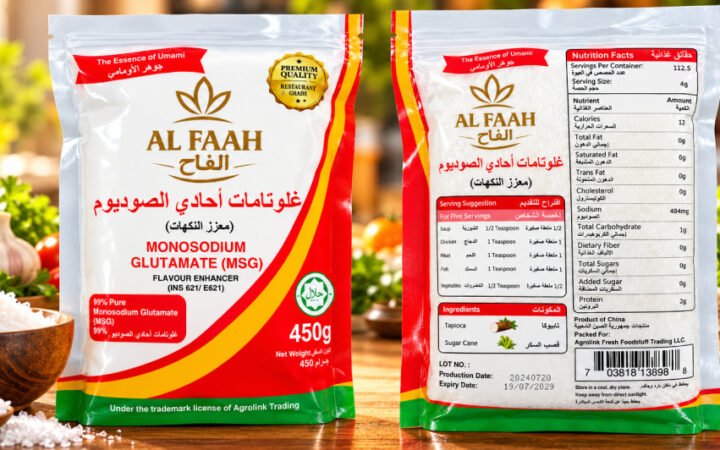
Ajinomoto monosodium glutamate, commonly associated with MSG, is one of the best-known flavour enhancers used in kitchens and food businesses around the world. Monosodium glutamate helps strengthen the savoury taste known as umami, making it particularly useful in soups, sauces, meat dishes, noodles, rice dishes, seasonings and many processed food applications.
For restaurants, catering companies, food manufacturers, wholesalers and professional kitchens, understanding how monosodium glutamate works can help achieve consistent flavour while developing recipes that customers enjoy. This guide explains what Ajinomoto MSG is, how monosodium glutamate is produced, how it enhances flavour and how it can be used effectively in different food applications.
What Is Ajinomoto Monosodium Glutamate?
AJI-NO-MOTO is a well-known umami seasoning whose main ingredient is monosodium glutamate, or MSG. MSG is the sodium salt of glutamic acid, an amino acid that occurs naturally in many foods. Glutamate can be found naturally in ingredients such as tomatoes, meat, fish, cheese and other protein-rich or savoury foods.
When monosodium glutamate is added to a suitable recipe, it activates taste receptors associated with umami. Umami is recognized as one of the five basic tastes alongside sweet, sour, salty and bitter. It is generally described as a rich, savoury taste that can make foods feel fuller and more satisfying.
What Does MSG Mean?
MSG stands for monosodium glutamate. It is a food ingredient primarily used as a flavour enhancer. In the United States, the Food and Drug Administration lists monosodium glutamate as a flavour enhancer and includes it within its food-substance regulatory framework. MSG should therefore be understood as a specific food ingredient rather than simply another name for a mixed seasoning.
What Is Umami Taste?
Umami is the savoury taste associated with glutamate. It plays an important role in the flavour of many familiar foods, including broths, tomatoes, mushrooms, aged cheeses, meats and fermented products.
The discovery of umami is closely connected with Japanese scientist Dr. Kikunae Ikeda. In the early twentieth century, Ikeda studied the distinctive savoury taste found in kombu seaweed broth and identified glutamate as responsible for that taste. His research eventually led to the development of a convenient umami seasoning based on monosodium glutamate.
How Is Monosodium Glutamate Made?
Modern MSG can be manufactured using fermentation. According to Ajinomoto, plant-derived raw materials such as sugar cane, sugar beets, cassava or corn may be used in the production process.
During fermentation, microorganisms use sugars to produce glutamic acid. The resulting material is then processed and neutralized to form monosodium glutamate. Further purification, crystallization and drying produce the familiar white crystalline MSG seasoning.
This fermentation concept is comparable in principle to fermentation processes used in producing many familiar foods. Modern manufacturing techniques allow food-grade MSG to be produced consistently and at commercial scale.
How Does Ajinomoto MSG Enhance Food Flavour?
Monosodium glutamate does not simply make food taste salty. Its primary contribution is umami. When used appropriately, MSG can strengthen savoury characteristics already present in a recipe and help create a more rounded flavour profile.
This makes MSG particularly useful in dishes containing vegetables, meat, poultry, seafood, stocks and sauces. Professional chefs and food manufacturers can incorporate it into carefully balanced seasoning systems alongside salt, herbs, spices and other ingredients.
Common Uses of Monosodium Glutamate
MSG has applications across household cooking, restaurants, catering operations and industrial food production. It is commonly used in soups and broths because umami can complement the savoury character of stocks and other ingredients.
Monosodium glutamate can also be used in noodles, fried rice, meat preparations, chicken dishes, vegetable dishes, marinades, gravies, sauces and selected snack seasonings. Food manufacturers may incorporate MSG into seasoning blends and formulated products where additional savoury flavour is required.
MSG for Restaurants and Catering Companies
Consistency is essential in professional food service. Customers generally expect their favourite dishes to deliver a similar flavour every time they order them. Standardized recipes and accurately measured seasonings can help restaurants and catering companies maintain this consistency.
MSG may be incorporated into a standardized recipe as part of the overall seasoning system. Kitchens should determine the appropriate quantity through recipe development and taste testing rather than adding excessive amounts. More MSG does not automatically mean better flavour; successful seasoning depends on balance.
Monosodium Glutamate for Food Manufacturing
Industrial food manufacturers require ingredients that perform consistently across production batches. Monosodium glutamate is used in various commercial applications because it provides a recognizable umami effect and can be accurately incorporated into formulated foods.
Depending on the product and applicable food regulations, MSG may be considered for seasoning mixes, soups, sauces, savoury snacks, instant foods, meat products, ready meals and other formulated foods. Manufacturers should always follow the food-additive, labelling and usage requirements applicable to the market where the finished product will be sold.
Is Monosodium Glutamate Safe?
MSG has been extensively evaluated as a food ingredient. The U.S. Food and Drug Administration includes monosodium glutamate within its regulatory framework and considers added MSG generally recognized as safe under its conditions of use. Scientific and regulatory assessments, however, should be interpreted within their specific jurisdictions and recommended conditions of use.
The European Food Safety Authority has also evaluated glutamic acid and glutamates used as food additives. Its 2017 assessment established a group acceptable daily intake for glutamic acid and glutamates and noted that estimated exposure could exceed that level for some population groups. This illustrates why responsible formulation, regulatory compliance and appropriate consumption remain important.
Does MSG Contain Sodium?
Yes. Monosodium glutamate contains sodium, as its name indicates. However, MSG contains less sodium by weight than ordinary table salt. Ajinomoto reports that MSG contains approximately 12% sodium, compared with approximately 39% sodium in table salt.
Because MSG provides umami as well as some sodium, carefully formulated recipes may use it alongside reduced quantities of salt while maintaining an appealing savoury taste. The final sodium content will always depend on the complete recipe, serving size and quantities of all sodium-containing ingredients.
MSG and Naturally Occurring Glutamate
Glutamate is not limited to packaged MSG. It occurs naturally in many everyday foods. Tomatoes, meat, fish, dairy products and various other foods contain glutamic acid or glutamate.
The glutamate associated with MSG produces the same characteristic umami taste response as glutamate found naturally in foods. This is one reason umami is present across cuisines around the world, even in recipes that do not contain added monosodium glutamate.
How to Use MSG in Cooking
MSG should be treated as one component of a complete seasoning system. Start with an established recipe or a small test batch and adjust gradually according to the desired flavour profile. Consider the existing amounts of salt, stock, sauces, spices and naturally umami-rich ingredients before determining the appropriate amount of MSG.
For commercial kitchens and food factories, recipe standardization is especially important. Recording ingredient quantities and conducting controlled tasting trials can help determine a consistent formulation for larger production volumes.
Why MSG Is Important in the Global Food Industry
Modern consumers enjoy flavours from many different culinary traditions, while food businesses need reliable ingredients that support consistent production. Monosodium glutamate has become an established ingredient in the international food sector because umami is relevant to a broad range of cuisines and savoury food categories.
Restaurants, hotels, catering companies, seasoning manufacturers, food factories, wholesalers and distributors may therefore encounter demand for food-grade monosodium glutamate in both retail and bulk formats. Product selection should consider purity specifications, packaging, traceability, regulatory compliance, storage requirements and the intended application.
Choosing a Monosodium Glutamate Supplier
Businesses purchasing MSG for wholesale or commercial use should look beyond price alone. Product quality, reliable supply, appropriate packaging, documentation and consistent specifications can be especially important when purchasing larger quantities.
Importers, wholesalers and food manufacturers should also verify product documentation and ensure that labelling and specifications comply with local regulations. Reliable sourcing becomes increasingly important for businesses that depend on uninterrupted supplies for restaurant operations, distribution or food manufacturing.
Storage and Handling of MSG
Monosodium glutamate should be stored according to the manufacturer’s instructions, generally in a cool, dry environment and protected from moisture and contamination. Once commercial packaging has been opened, proper resealing and hygienic handling can help maintain product quality.
Restaurants and food factories should incorporate MSG into their normal food-safety and inventory-management procedures. Clear product identification, clean storage areas and stock rotation can support efficient handling in professional environments.
Ajinomoto MSG and the Growing Understanding of Umami
The global understanding of umami has developed significantly since its identification more than a century ago. Today, umami is widely discussed in culinary science and professional cooking as a fundamental taste that contributes to the savoury character of food.
Ajinomoto monosodium glutamate has played an important historical role in making concentrated umami seasoning widely available. At the same time, MSG is now produced and supplied by manufacturers around the world, giving restaurants, wholesalers and food manufacturers different sourcing options according to their quality, specification and commercial requirements.
Frequently Asked Questions About Ajinomoto Monosodium Glutamate
Is Ajinomoto the Same as MSG?
AJI-NO-MOTO is a branded umami seasoning associated with monosodium glutamate. MSG is the generic abbreviation for monosodium glutamate and can be manufactured by different producers.
What Is MSG Used For?
MSG is primarily used as a flavour enhancer to add or strengthen umami taste. Common applications include soups, broths, sauces, noodles, rice dishes, meat preparations, vegetables, seasoning blends, savoury snacks and various manufactured foods.
What Does MSG Taste Like?
MSG provides umami, a savoury taste distinct from sweet, sour, salty and bitter. Its effect is usually most noticeable when it is incorporated into savoury foods rather than tasted on its own.
Is MSG the Same as Salt?
No. Table salt is sodium chloride, while MSG is monosodium glutamate. Both contain sodium, but they have different chemical compositions and different functions in food. Salt primarily contributes saltiness, whereas MSG is principally used to enhance umami.
Can Restaurants Use MSG?
MSG is widely used in food preparation, subject to applicable local food regulations and labelling requirements. Restaurants should use it as part of a balanced, standardized recipe and follow relevant food-safety requirements.
Can MSG Be Used in Food Manufacturing?
Yes, monosodium glutamate has numerous commercial food applications. Food manufacturers should confirm permitted applications, maximum levels where applicable, ingredient declarations and other regulatory requirements for each target market.
Conclusion
Ajinomoto monosodium glutamate is closely associated with the development and worldwide popularity of umami seasoning. MSG is the sodium salt of glutamic acid and is primarily used to enhance savoury flavour in foods. Through modern fermentation and controlled manufacturing, monosodium glutamate can be produced for household, restaurant, catering and industrial food applications.
For professional food businesses, the key to using MSG effectively is balance. Appropriate formulation, consistent product quality, accurate measurement and compliance with local food regulations can help restaurants and manufacturers achieve reliable flavour results. As consumers and food professionals continue to explore the science of umami, monosodium glutamate remains an important ingredient in the global savoury food industry.

Leave A Comment