
Food Trading Company in Pakistan: Connecting Quality Products to Global Markets - meridianpkfood
- Home
- Food Trading Company in Pakistan: Connecting Quality Products to Global Markets
- uzmanulhasan
- July 26, 2026
- 0 Comments
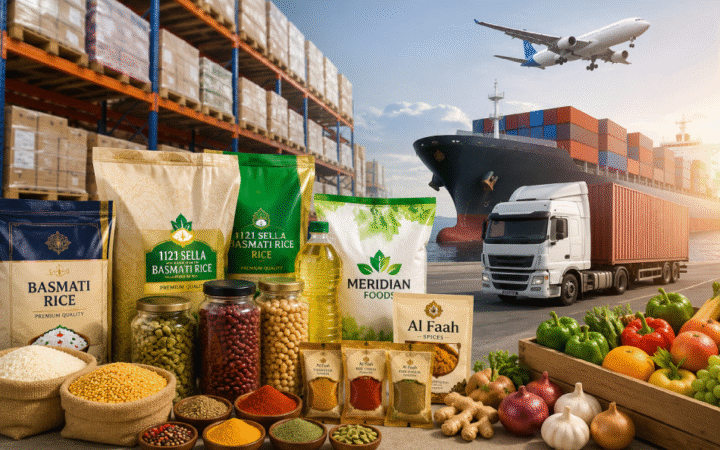
Pakistan has a strong agricultural foundation and produces a wide range of food products for domestic and international markets. From aromatic basmati rice and traditional spices to fresh fruits and vegetables, Pakistani food products are valued for their taste, variety, and commercial potential.
A professional food trading company in Pakistan plays an important role in connecting farmers, processors, manufacturers, wholesalers, distributors, supermarkets, restaurants, and overseas buyers. By managing sourcing, quality control, packaging, documentation, and logistics, food trading companies help products move efficiently from their place of origin to customers around the world.
Meridian Foods (Private) Limited supports this supply chain by offering food import, export, and trading solutions across multiple product categories. The company focuses on building reliable business relationships while supplying products that meet the commercial requirements of buyers in different markets.
What Does a Food Trading Company Do?
A food trading company purchases, sells, imports, exports, or distributes food products on behalf of producers, manufacturers, and buyers. Its responsibilities extend beyond simply buying and selling goods.
A reliable food trading partner may assist with:
- Product sourcing from suitable farms, mills, processors, and manufacturers
- Supplier evaluation and commercial negotiations
- Product specifications and quality requirements
- Packaging and private-label coordination
- Export documentation and shipment planning
- Import procedures and customs-related documentation
- Container loading and international logistics
- Wholesale and distributor supply
- Communication between suppliers and overseas buyers
These services help reduce complexity for businesses that want to purchase Pakistani food products or introduce international food products into Pakistan.
Why Pakistan Is Important for Global Food Trade
Pakistan has diverse agricultural regions, suitable growing conditions, experienced farmers, and an established food-processing sector. These advantages allow the country to supply both staple foods and seasonal agricultural products.
International buyers source products from Pakistan for several reasons, including product availability, competitive commercial opportunities, traditional food varieties, and access to experienced exporters.
Some of the most commercially important food categories include rice, spices, mangoes, citrus fruits, potatoes, onions, fresh vegetables, pulses, salt, and processed grocery products.
However, successful food exports require more than product availability. Buyers also expect consistent specifications, appropriate packaging, accurate documentation, dependable shipping schedules, and clear communication. This is where an experienced Pakistan food export company can provide valuable support.
Major Food Products Traded from Pakistan
1. Pakistani Rice
Rice is one of Pakistan’s most recognized agricultural exports. Pakistani rice is supplied to wholesalers, food-service companies, retailers, importers, and distributors in many international markets.
Popular commercial rice categories include:
- Basmati rice
- 1121 basmati rice
- Steam rice
- Sella or parboiled rice
- Extra-long grain rice
- Non-basmati rice
- White rice
- Brown rice
Rice buyers normally evaluate grain length, moisture level, broken percentage, crop year, cooking performance, aroma, colour, purity, packaging, and shipment quantity before placing an order.
As a rice exporter in Pakistan, a trading company must clearly communicate these specifications and coordinate with suitable rice mills. This helps ensure that the supplied product matches the buyer’s market and pricing requirements.
2. Spices and Seasonings
Pakistan has a rich culinary culture in which spices are used in homes, restaurants, catering businesses, and food manufacturing. Pakistani spices and seasoning blends can serve ethnic grocery stores, mainstream retailers, wholesale markets, and food-service customers.
Commonly traded spice products include:
- Red chilli powder
- Turmeric powder
- Coriander powder
- Cumin seeds and powder
- Black pepper
- Garam masala
- Biryani masala
- Pulao masala
- Karahi masala
- Meat and chicken seasoning blends
For international trade, spices must be properly cleaned, processed, packed, labelled, and protected from moisture and contamination. Buyers may also require specific laboratory reports, ingredient declarations, nutritional information, shelf-life details, and country-specific labelling.
A professional spices exporter from Pakistan should confirm all product and packaging requirements before production begins.
3. Fresh Fruits
Pakistan produces several fresh fruits with export potential. Mangoes, citrus fruits, dates, guavas, and other seasonal products can attract buyers when they are harvested, graded, packed, and shipped correctly.
Fresh fruit trading requires careful management because quality can be affected by temperature, handling, transport time, maturity, packaging, and storage conditions.
A dependable fruit exporter in Pakistan should coordinate closely with growers, packhouses, freight companies, and buyers to reduce delays and protect product quality throughout the supply chain.
4. Fresh Vegetables
Fresh vegetables are regularly traded through wholesale markets, retail distribution networks, restaurants, catering companies, and food-service suppliers.
Depending on the season and destination-market requirements, exportable vegetables may include:
- Potatoes
- Onions
- Green chillies
- Tomatoes
- Cauliflower
- Spinach
- Fresh herbs
- Garlic
- Ginger
- Other seasonal produce
Vegetable exports require correct sorting, grading, ventilation, packaging, palletisation, temperature management, and shipment planning. Product size, colour, freshness, weight, and packaging format should be agreed upon before dispatch.
5. Pulses, Sugar, Oils, and Grocery Products
Food trading companies may also handle imported and locally sourced grocery products. These can include pulses, sugar, edible oils, olive oil, peanuts, tea, black pepper, cumin, frozen foods, and other consumer products.
Importing grocery products into Pakistan requires market research, supplier verification, commercial documentation, label review, customs coordination, and an effective distribution plan.
Businesses should study customer demand, competitor pricing, shelf life, storage requirements, and expected sales volume before committing to a large shipment.
How Meridian Foods Supports Food Buyers
Meridian Foods (Private) Limited works with buyers looking for food products from Pakistan as well as businesses exploring food import opportunities. The objective is to make trade more organized, transparent, and commercially practical.
The company’s product focus includes:
- Pakistani rice varieties
- Spices and seasoning products
- Fresh fruits
- Fresh vegetables
- Pulses and grocery items
- Edible oils and olive oil
- Selected imported food products
- Wholesale and private-label opportunities
Product availability, specifications, packaging, pricing, and minimum order quantity may vary according to the season, supplier, destination, and buyer requirements.
Importance of Product Quality in Food Trading
Quality is one of the most important factors in international food trade. A low price may attract initial interest, but inconsistent quality can damage customer confidence and create financial losses for both buyers and sellers.
Food quality management should begin before the order is confirmed. Buyers and suppliers should agree on measurable specifications instead of relying only on general descriptions such as “premium quality” or “best quality.”
Depending on the product, specifications may cover:
- Product variety and origin
- Size, grade, colour, and appearance
- Moisture level
- Broken or damaged percentage
- Purity and foreign-matter limits
- Net and gross weight
- Packaging material
- Production and expiry dates
- Storage temperature
- Required certificates or laboratory reports
Clear specifications protect both parties and reduce the possibility of disputes after shipment.
Food Packaging and Private-Label Solutions
Packaging influences product protection, transportation, shelf presentation, brand identity, and customer trust. The correct packaging format depends on whether a product is intended for wholesale, retail, food service, or industrial use.
Rice, for example, may be packed in woven polypropylene bags, laminated bags, non-woven bags, pouches, or bulk sacks. Spices may be supplied in retail pouches, jars, boxes, food-service packs, or bulk cartons.
Businesses developing their own brands may require private-label food products from Pakistan. A private-label project can involve:
- Brand-name placement
- Logo and packaging design
- Custom pack sizes
- Ingredient and nutritional information
- Barcode placement
- Country-of-origin declaration
- Production and expiry coding
- Language-specific labels
- Outer-carton design
All packaging information should be reviewed according to the regulations of the destination market before printing a full production quantity.
Export Documentation and Logistics
International food shipments require accurate documentation. Missing or incorrect information can cause customs delays, additional charges, payment problems, or rejection at the destination.
Documents commonly used in food exports may include:
- Commercial invoice
- Packing list
- Bill of lading or airway bill
- Certificate of origin
- Phytosanitary certificate for applicable products
- Health certificate where required
- Fumigation certificate where applicable
- Inspection or laboratory report
- Insurance documents
- Product-specific declarations
The exact documentation depends on the product, importing country, payment method, shipping route, and buyer’s instructions.
A responsible food export company in Pakistan should confirm documentation requirements before loading the shipment rather than attempting to correct avoidable errors after dispatch.
Choosing the Right Food Trading Company in Pakistan
Selecting the right trading partner can have a direct effect on product quality, delivery performance, cash flow, and customer satisfaction. Buyers should evaluate more than the quoted price.
Before confirming an order, consider the following points:
Product Knowledge
The supplier should understand the product’s commercial grades, specifications, packaging, storage conditions, and seasonal availability.
Clear Communication
Important details should be communicated in writing, including price, quantity, Incoterms, payment terms, production period, shipment schedule, and required documents.
Transparent Specifications
Product quality should be defined through measurable specifications, approved samples, photographs, inspection reports, or laboratory results where appropriate.
Reliable Packaging
The packaging should protect the product during handling, storage, and transportation while also complying with destination-market labelling rules.
Realistic Delivery Commitments
A professional supplier should provide practical shipment timelines and communicate early when weather, crop conditions, port congestion, or production issues may cause delays.
Long-Term Business Approach
The best food trading relationships are built on repeat business, transparent problem-solving, consistent performance, and mutual respect.
Food Trading Opportunities in the GCC and International Markets
Pakistani food products have opportunities in the United Arab Emirates, Saudi Arabia, Oman, Qatar, Bahrain, Kuwait, the United Kingdom, Europe, North America, Africa, and Asian markets.
However, each destination has different customer preferences and regulatory requirements. Pack sizes, product grades, languages, price expectations, and distribution channels can vary significantly.
For example, wholesale buyers may prefer larger economical packs, while supermarkets may require attractive retail packaging, barcodes, nutritional panels, and local-language labels. Hotels, restaurants, and catering companies may prioritize bulk packs, consistent taste, and dependable deliveries.
Exporters should therefore develop a market-specific strategy rather than offering the same product and packaging to every country.
Benefits of Working With Meridian Foods
Businesses searching for a reliable food trading company in Pakistan need a partner that understands both products and commercial requirements.
Meridian Foods aims to support buyers through:
- Access to multiple food categories
- Coordination with growers, mills, processors, and manufacturers
- Product and packaging discussions based on buyer requirements
- Wholesale and private-label opportunities
- Import and export coordination
- Support for international buyers and distributors
- A professional approach to long-term business relationships
Every inquiry should include sufficient information about the required product, destination, quantity, packaging, quality level, and target delivery period. This allows the company to prepare a more accurate commercial offer.
Information to Include in a Food Product Inquiry
To receive a suitable quotation, buyers should provide the following details:
- Product name and required variety
- Quality specifications or grade
- Required quantity
- Retail or bulk packaging size
- Private-label requirements, if applicable
- Destination country and port
- Preferred shipping terms
- Required certificates
- Target delivery date
- Preferred payment terms
A detailed inquiry reduces unnecessary communication and helps the supplier calculate product, packaging, transportation, and documentation costs correctly.
Frequently Asked Questions
What products does a food trading company in Pakistan export?
Food trading companies in Pakistan may export rice, spices, fruits, vegetables, pulses, salt, processed foods, and other agricultural products. The exact product range depends on the company’s suppliers, season, processing capabilities, and target markets.
Can Pakistani food products be supplied under a private label?
Yes. Many products can be supplied under a buyer’s own brand, subject to production quantity, packaging availability, trademark requirements, and destination-market regulations.
What is the minimum order quantity for food exports?
The minimum order quantity varies by product and packaging. Some suppliers work with pallet quantities, while others require a full 20-foot or 40-foot container. Custom packaging may require a higher minimum quantity.
How can buyers verify product quality before shipment?
Buyers can request samples, product photographs, specification sheets, laboratory reports, third-party inspections, loading supervision, or pre-shipment inspection services where appropriate.
Does Meridian Foods handle both food imports and exports?
Meridian Foods is involved in food trading activities that include Pakistani export products and selected imported food categories. Availability and commercial terms should be confirmed directly for each inquiry.
How should an overseas buyer request a quotation?
The buyer should send the product name, specifications, quantity, packaging, destination port, required documents, and preferred shipping terms. Detailed information helps the exporter prepare a more accurate quotation.
Build a Reliable Food Supply Partnership
Food trading requires careful sourcing, consistent quality, accurate documentation, dependable logistics, and professional communication. Choosing the right trading company can help buyers reduce supply-chain risks and develop products that meet the expectations of their customers.
Meridian Foods (Private) Limited welcomes inquiries from importers, wholesalers, distributors, supermarkets, food-service businesses, and private-label buyers seeking quality food products from Pakistan.
Whether your business requires Pakistani rice, spices, fresh fruits, vegetables, grocery products, or customized packaging, Meridian Foods can discuss your requirements and explore suitable trading opportunities.
Contact Meridian Foods today to discuss your food import, export, wholesale, or private-label requirements.

Leave A Comment